
The Overlooked Problem With Small Dogs Pulling on the Lead


Small dogs often get away with behaviour that would immediately concern owners if they were displayed by a large dog.
A Dachshund screaming at another dog across the road is dismissed as “feisty”.A Terrier dragging itself to the end of the lead is called “excitable”.A Chihuahua barking and lunging in panic is laughed at.
Yet if a German Shepherd or Labrador behaved the same way, many owners would immediately seek professional help.
This double standard causes huge problems for small dogs because their emotional wellbeing, physical health and training needs are often unintentionally overlooked.
Many Small Dogs Are Never Properly Taught How to Walk on a Lead
One of the most common things I see is small dogs who have never actually been taught how to walk calmly and connected to their owner.
There is often an assumption that:
they will naturally know how to walk on a lead
they do not pull hard enough to matter
they are “easy” dogs
lead pulling is less serious because they are small
But small dogs need guidance and training just as much as large dogs do.
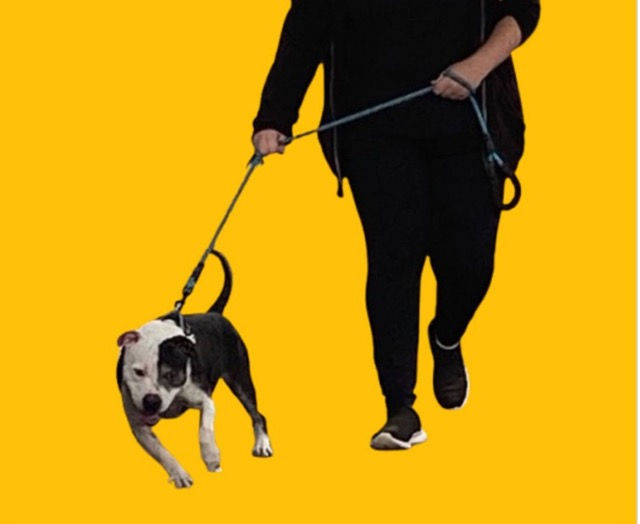
In fact, many small dogs spend walks constantly out in front of their owners, scanning the environment independently with very little connection or engagement with the human holding the lead.
Over time, this lack of connection can feed directly into leash reactivity.
Walking Out in Front Creates Tension and Hypervigilance
When a small dog spends every walk charging ahead at the end of the lead, several things often happen.
The dog:
notices triggers first
feels responsible for handling approaching dogs
becomes highly visually fixated on the environment
remains physically tense
struggles to regulate emotionally
If another dog appears, the reactive response often escalates quickly because the dog is already in a heightened state of arousal before the interaction even happens.
Many reactive small dogs are effectively walking around “on patrol”.
They are not calmly walking with their owner. They are scanning, anticipating and reacting.
This is exhausting for the nervous system.
Poorly Fitting Equipment Makes Things Worse
Another major issue is poorly fitting walking equipment.
Many owners purchase harnesses from large pet shops without any real guidance on fit, structure or function. Sadly, a huge number of these harnesses sit loosely around the dog’s body and provide little meaningful communication through the lead.
Some twist sideways.Some ride up into the shoulders.Some allow the dog to throw its entire body weight forwards continuously.
The result is often a dog who feels physically disconnected from the owner while rehearsing constant pulling behaviour.
Equipment should support calm movement and communication, not simply attach a lead to the dog.
Unfortunately, modern marketing around “kind” equipment can create confusion, with owners believing any harness automatically solves pulling or reactivity problems when training and handling skills are still essential.
Small Dogs Experience Stress Too
One of the most overlooked parts of small dog reactivity is the physical impact on the dog’s body.
Constant pulling, barking, lunging and over-arousal place repeated strain on the nervous system.
When dogs repeatedly enter states of stress and hypervigilance, adrenaline and cortisol levels rise. Over time this can contribute to chronic tension, poor emotional regulation, digestive issues, poor recovery and an inability to properly relax.
Small dogs are not immune to stress simply because they are cute or portable.
In fact, many live in a near constant state of environmental overwhelm because their behaviour is unintentionally ignored for so long.
“That’s Just My Dog” Is Often a Dangerous Mindset
Perhaps the saddest thing is how often reactive behaviour in small dogs becomes normalised.
Owners frequently say:
“He’s always been like that.”
“She just doesn’t like other dogs.”
“That’s his personality.”
“He thinks he’s a big dog.”
Meanwhile the dog may actually be showing clear communication signals indicating stress, discomfort, fear or frustration.
These signs are often subtle at first:
lip licking
scanning
stiffening
hard staring
shallow breathing
pacing
vocalising
frantic pulling
inability to disengage
When these signals are repeatedly missed, dogs often escalate to louder and more explosive behaviours because quieter communication has gone unnoticed.
Small Dogs Have Drives and Needs Too
Being small does not remove a dog’s instincts, drives or emotional needs.
Terriers were bred to hunt and chase.Dachshunds were bred for intense scent work and pursuit.Many toy breeds were bred specifically for companionship and emotional closeness with humans.
These dogs still need:
structure
guidance
fulfilment
calm leadership
mental stimulation
emotional security
appropriate boundaries
Without those things, behavioural problems often emerge regardless of size.
Calm Walks Begin With Better Connection
One of the biggest transformations I see in reactive small dogs comes when owners stop viewing walks as simply “exercise” and begin focusing on relationship, connection and emotional regulation.
Loose lead walking is not just about stopping pulling.
It is about teaching the dog:
how to move calmly with you
how to check in
how to feel guided and safe
how to disengage from triggers
how to regulate excitement and stress
When owners improve their handling skills and begin communicating more clearly through movement, timing and consistency, many small dogs visibly relax.
Their world starts feeling less chaotic because they no longer feel responsible for managing everything themselves.
Small Dogs Deserve Training Too
Small dogs deserve the same level of understanding, training and emotional support as large dogs.
Their struggles should not be laughed off or ignored simply because they are physically easier to manage.
A calm, connected walk matters just as much for a Chihuahua as it does for a Labrador.
And often, once owners truly understand what their small dog has been trying to communicate all along, everything begins to change.

Comments