
Teenage Tearaways: What Nobody Tells You About the Adolescent Dog


You survived the puppy stage. The biting, the toilet training, the 3am wake-ups. You put in the work, you were consistent, and your dog was actually getting it. And then, somewhere around six months, something shifted.
Suddenly the dog who used to sit on cue is acting like he's never heard the word in his life. He's pulling on the lead again, ignoring his name, bouncing off the walls, and testing every boundary you thought you'd set. You're not imagining it, and you haven't failed. Your dog has hit adolescence.
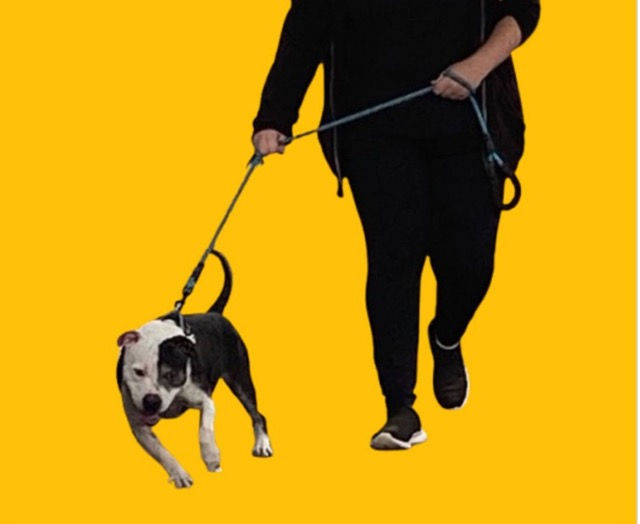
BTW, that's Bowser on the left - a total tearaway Staffy X who drove his loving mum crazy!
What's Actually Happening in Their Brain
Here's the bit nobody warns you about: adolescence in dogs is a genuine neurological event, not just a bit of naughtiness. Between roughly six months and two years, a dog's brain goes through significant structural changes. The prefrontal cortex, the part responsible for decision-making, impulse control, and emotional regulation, is still developing. Sound familiar? It's the same reason teenagers make questionable decisions at 11pm on a school night.
During this period, the brain is also flooded with hormones whether your dog is neutered or not. The limbic system, which governs emotional and reactive behaviour, is firing hard, while the rational, thinking part of the brain is still catching up. Your dog is not being wilfully difficult. He is operating with a brain that is quite literally under construction.
And here's the part that catches a lot of owners off guard: this is also when fear periods can resurface, when reactivity often first appears, and when social relationships with other dogs shift. It is a genuinely complex time for them.
Why the Training Seems to Have Disappeared
It hasn't, not really. But impulse control is one of the last things to come fully online, and during adolescence it takes far more effort for a dog to override an instinct or excitement response than it did at eight weeks old.
Think of it like this. When your puppy was small and the world was new, you were the most interesting thing in it. Now there are squirrels, other dogs, smells on every lamppost, and a whole world of stimulation competing for that attention. The training is still in there. It just gets drowned out.
This is also why consistency matters more during adolescence than at any other stage. Every time a behaviour is rehearsed, it becomes more established. Every time it goes unaddressed, it gets stronger. The window you have right now is genuinely important.
Large Breeds: The Long Game
If you have a Husky, a German Shepherd, a Mastiff, Golden Retriever, or any other large or giant breed, it is worth knowing that full maturity often does not arrive until the two-year mark, and in some cases beyond that. You may be managing adolescence for considerably longer than owners of smaller breeds, and that is completely normal. It does not mean you are doing anything wrong. It means you need a plan that is built for the long haul, not a quick fix.
What Actually Helps
Over the past year, around 80% of the dogs I have worked with have been between six months and two years old. This phase is by far the most common reason owners reach out, and the most common reason people consider giving up on training altogether. I want to be clear: it gets better. But how you handle this period makes a real difference to what comes out the other side.
Teenage dogs in particular are actively looking for structure; without it, the behaviour that's frustrating you will keep escalating. And that means teaching your dog both what TO do and making it clear what NOT to do. A dog who only hears 'yes' has no framework for understanding boundaries. You do not need to be harsh. You need to be clear. And clear is what works. That means:
Reinforcing the behaviours you want to see more of, consistently and generously
Managing the environment so your dog is not constantly in a position to rehearse the wrong thing
Building focus and impulse control as specific skills, not just hoping they appear
Setting clear expectations around what is and is not acceptable, and following through every single time
You Are Not Alone in This
The adolescent phase is the point at which most owners start to doubt themselves. They wonder if they've left it too late, if their dog is just "one of those dogs", or if they missed some critical window. In most cases, none of that is true.
What they needed was someone to explain what was actually going on, and a practical plan built around where their dog is right now, not where they wish he was.
If your dog is in that six-month to two-year window and you are finding it hard going, I would love to help. Book a free 30-minute consultation call with me and we will talk through what's happening, what's driving it, and what to do next. No commitment, just a proper conversation.

Comments